
How do we begin to process the first reading for this week: Abraham is asked to kill his son as an act of faith and that God would command it? The translation is unambiguous. Raise your hand if you would even consider sacrificing your child at God’s command. Me neither! What complicates this situation is that Isaac is the long-awaited child; he is the only one left in Abraham’s household. To the human mind, this is an incomprehensible request.
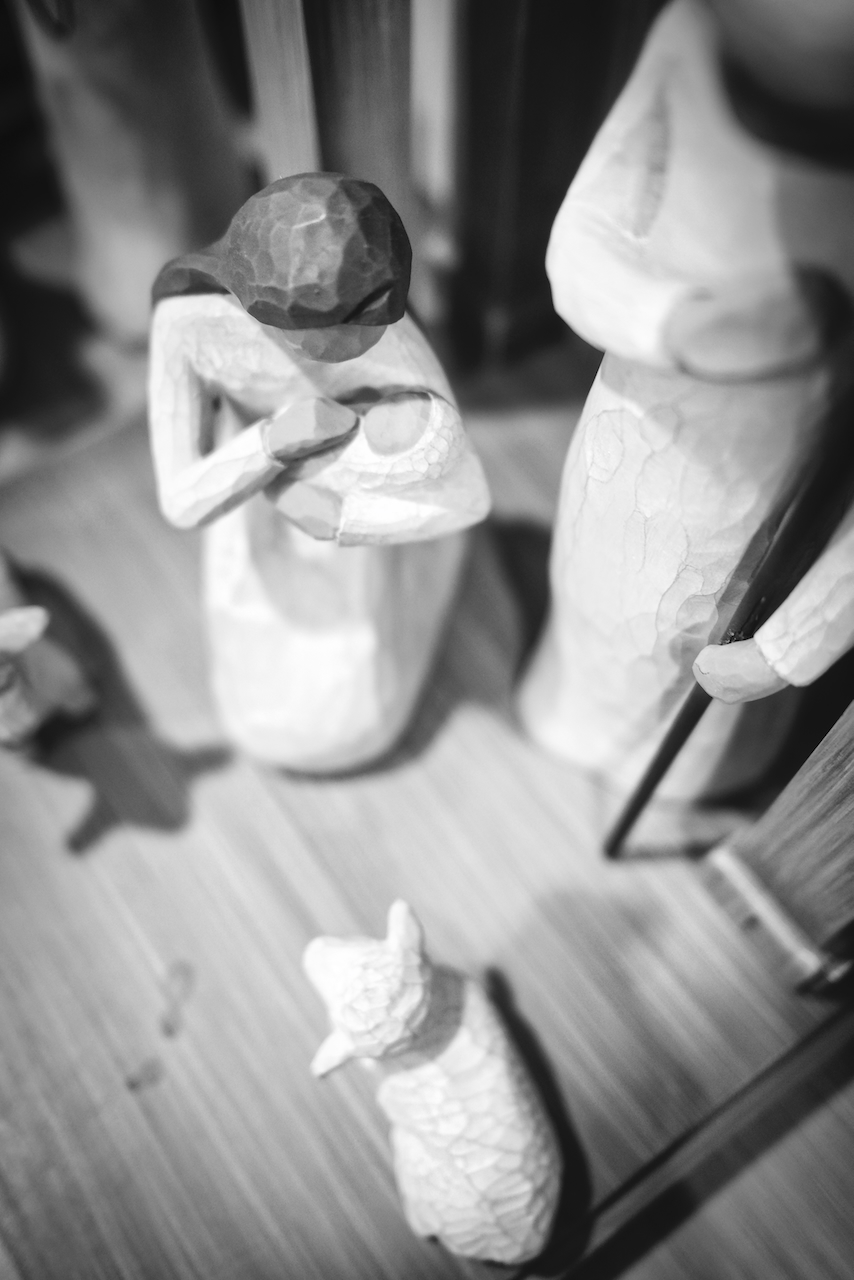
In some of my research for today’s reflection, it was suggested to read this portion of Genesis with the entire history in mind. I’m still not convinced that the sacrifice of a child is God’s real request; how about you? A primary concern of the prior readings was how will Abraham produce a son when Sarah is barren? We are overjoyed when Sarah gives birth to Isaac and now Isaac must be sacrificed!
WHAT?!?!
Hold on!
This makes no sense.
Abraham’s actions throughout Genesis suggest that he has had doubts, doesn’t always trust God, or believe God is a god of his word. Perhaps this was God’s way of having Abraham determine where his loyalties lie? This is the first time Abraham’s fear of God is revealed. Was that the purpose? Is the lesson that we should both trust and fear God? This story ends well but we all know how God gives his own son up to death in a later story. Today’s story, along with Holy Week’s stories, invites us to fear and be in awe as well as display deep gratitude for the redemption that awaits.
I grew up in a household in which God was “keeping score.” Every bad thing that happened was because I disobeyed, I lied, I didn’t … fill in the blank. I can’t tell you how many times I heard “God did it!” from my mother. So this week’s second reading always throws me for a loop. You mean I don’t have to be “good” to earn God’s favor or approval? What does it mean that God is “for us”? Sometimes I think this verse means God endorses my plans, He’s on my side. However, life has shown me that this is not always the case. I think that instead of me trying to get God to be on my side, God is instead trying to grab me to be on His side. I’m still trying to figure out how to be on God’s side. As we all know, some days it’s easier than others. As the reading continues, we are told that it’s not logical for God to withhold good if He has given us the ultimate good.
Throughout the Bible, we’ve been taken through stories that show life as good and lovely but we can’t have any of it (think of Adam and Eve). How many in our society think: if I could only have ______________, it would be great? Too many; it seems to be the cause of much of our suffering; trying to fill our holes with material things, pleasure, financial well-being, etc.
Some questions I think we should confront are:
-What kind of a Father is God?
-What kind of longing do I still have that makes me doubt that God is on my side?
-Am I asking God to prove his love for me?
The last tidbit from our second reading is that no one can bring a charge against God’s chosen ones. Why is this important? We’ve read in Revelations that Satan constantly and daily brings accusations against the chosen ones. I know this only too well – they manifest as feelings of doubt, shame, guilt, insecurity, etc. But Satan is only half right. We are sinful, but Christ has borne our sins and our guilt and our shame. This reading reminds us that only God has justified us, and therefore, no one can bring a charge against us.
Moving on to our gospel about the transfiguration on Mount Tabor which is the New Covenant as opposed to Mount Sinai where God revealed his glory to Moses: the old covenant. A few weeks ago we read about Jesus’ baptism. Some scholars think the voice from heaven during the baptism was for only Jesus to hear, nothing too “over the top.” The transfiguration is very different; Jesus becomes a beacon and the voice addresses all of those present. Jesus is starting to become noticed and the transfiguration also serves to reveal the trinity: the Father’s voice is heard, the Son is transfigured, and the Spirit is present in the cloud. This story feels a bit out of character for Jesus — his clothes become dazzling white, two well-known prophets appear with Jesus, and the voice is heard by everyone present. But true to Jesus’ form, he tells Peter, James, and John not to tell anyone. Again with the secrets!! Yet in some respects, this feels like a change for Jesus; he begins to reveal himself. His followers can no longer see him as just extraordinary but rather as holy. It may help us to remember that God’s holiness is shared. These three find themselves on holy ground and in privileged company. If we recall stories of Moses and Elijah, both share moments of intimacy with God. When one is intimate with God, everything can change, right? In addition, both prophets worked to help the Jews remain faithful to God even as they suffered. I wonder if the light of the transfiguration is meant to shine a light ahead into Lent to help us hold onto our hope and confidence that God is on our side … ALWAYS.

I’d like to delve deeper into some themes we’ve been discussing and interweave them with today’s readings. Currently my self-study book is another one by Gary Zukav; I’ve referred to his work before. He talks about the Earth School and the difference between internal power and external power. These themes seem to fit in well with what we’ve been discussing: light and darkness, the need for community and to be alone, the wheat and the weeds, our personal gardens within, and which dog to feed – the good or the bad. One of the contrasts that struck me is that Zukav talks a lot about coming from a place of fear or a place of love. I think these can be easily translated into dark and light.
I recently finished the Matthew Perry memoir and I found it to be a very sad read. He was one of the main characters on the sitcom Friends and considered to be highly successful. By reading his life story in his memoir, you soon realize that addiction to opioids, alcoholism, and a tremendous feeling of inadequacy are overwhelming obstacles that he attempted to overcome. He was found dead at his home from acute effects of ketamine in October 2023 at the age of 54. This is a “star” who sought his worth externally instead of internally; who struggled to connect with God; who operated from fear and not from love. How many in our community live this way? Outwardly successful, emotionally balanced, well liked, the life of the party, and yet are fighting such dark demons when alone and unable to find their God or approach the light.
A way I like to work with my students during our social emotional learning block about responding to others is something I read when I was working on cognitive behavioral therapy. First, I share with my students that emotions are controllable; you can control your thoughts that lead to emotions. This is a new concept for so many of my students. So getting back to the strategy I share with them: Think of it as a basketball game. The person you are with is placing certain players on the court – anger, aggressiveness, etc. You–as the coach of your emotions–can choose to put the same players on the court or you can choose to play patience, understanding, sportsmanship, etc. Again you can choose to play from fear or from love or, to tie in today’s reading’s themes, darkness or light.
For me, my instinct is to react from fear/darkness and not respond from love/light. How can I turn this around? I think I’ve started but have a ways to go. I, at times, feel like Nicodemus from The Chosen when Jesus says “you were so close.” (Yes, Ken and I have started watching it. Is that called peer pressure?) What I find works best for me is the ability to volunteer, give back, participate, etc. I’m struggling to find these opportunities while working full-time. It was much easier when I could easily plug in at our parish but it seems those opportunities have vanished. As a result, I’ve pivoted and am trying to spend quality time in solitude with God. Even there, it’s challenging to always come from fear into love, from darkness into light. I remember a book I read about the need for quiet, prayer time; alone time with God. It compared not using quiet time to trying to breathe with only one lung.
Both community and solitude are key to connection with God.
Maggi Taurone
A quote that keeps appearing in various ways to me from tinybuddha.com is: “Life is amazing. And then it’s awful. And then it’s amazing again. And in between the amazing and the awful, it’s ordinary and mundane and routine. Breathe in the amazing, hold on through the awful, and relax and exhale during the ordinary. That’s just living a heartbreaking, soul-healing, amazing, awful, ordinary life. And it’s breathtakingly beautiful.”
As I continue to learn and implement ways to respond from love rather than react from fear, to move from the darkness to the light, to more frequently water my flowers and not my weeds, to spend time on the shore with friends and alone in the desert my question is this: How are you letting the light of the transfiguration shine upon your lenten journey?
 Composing Catholic
Thank you Maggi.
This was great.
I really liked that Joey sent it out with the pictures too.
I liked when you said something about trying to be on God’s side. And the part about breathing in on the amazing… And also the CBT part stands out with the basketball players.
Peace,
Suzy A
LikeLike