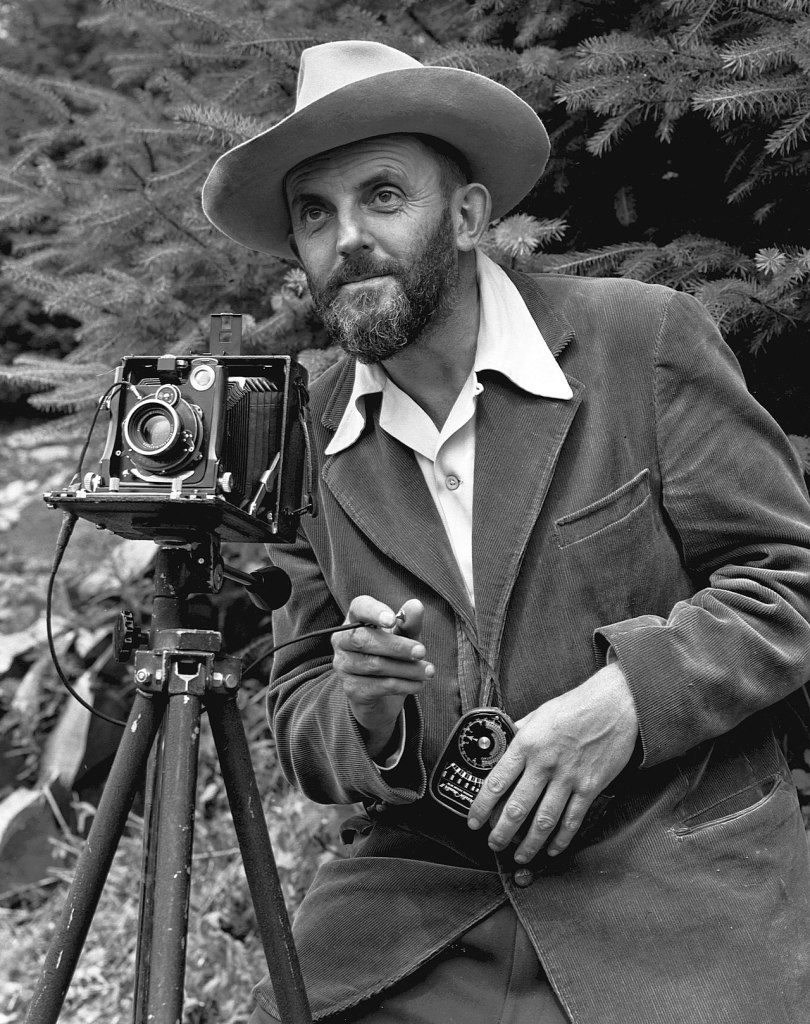
Back nearly a century ago, Ansel Adams hiked out into the California wilderness carrying a heavy camera through a rough terrain. He would wait for hours until the sun and weather conditions were just right, experiment with varying compositions, and then at the right moment capture a striking image of the landscape. Back in his studio sometime later, he carefully developed the film and then painstakingly passed a well controlled light onto photosensitive paper, adjusting and working that light until his print was precisely to his liking. This took multiple tries and sometimes many months to perfect. Then, that print would hang in a gallery so that others could enjoy it. Fans of his work often stood in front of the large photograph for hours admiring the fine details and subtle textures of the image.
My how things have changed.
Today, we can grab a quick photo with our cellphones, edit it instantaneously, and then post it to Instagram in a matter of seconds. Then, others can take a quick glance and within an instant give it a thumbs up and move on. Technology has changed the pace of life and this example is only one of many that illustrate that fact. Life simply moves a lot faster than it used to.
Because of the devices that we carry, we can stay connected with others at all times. Emails, text messages, video chats, and GPS tracking keep us in touch with each other in ways that only science fiction writers could have once imagined.
But, we also hear about how social media, always-on personal access, and the tech we now can’t live without has also made many of us feel more isolated than ever before. Some have noted that loneliness is at epidemic levels and that our screen obsession has diminished our ability to actually connect out there in the real world. A school teacher recently told me that her students today struggle to communicate during classroom conversations because they have acclimated to Zoom style interactions which are more controlled and one dimensional.
So, all this technology has benefits. But there are drawbacks as well.
I’ll speak for myself here: my own attention span had shortened over time. Where I once sent something by the U.S. Postal Service and waited, I now grow impatient if someone hasn’t answered my email within minutes. If I find a bit of time to kill, where I would at one time read a few pages from a book, I now find myself jumping on my phone and scrolling through endless pages of text or watching a stream of mindless videos.
Additionally, I sometimes choose to send a quick text message instead of a phone call or even an in person visit with a friend or family member. Technology has lessened my attention span and ability to truly connect with others; it seems as though this is happening to nearly everyone I know.
And this is not good for our faith life.
Understanding this, I’ve begun to fight back. I’m putting down my phone more. Not taking it everywhere I go. I’m favoring books over videos and I’m staying off of social media sites and their associated apps more these days. I’m trying to rediscover down time, white space, and silence.
I believe that down time, white space, and silence are essential to our faith lives. If we can create some open space for Jesus to enter, if we can pursue more silence so that we may consider the movement of the Holy Spirit in our lives, and if we seek to connect more fully with the Father, then our lives will be all the more rich for it.
To do this, I believe that we need to slow down the pace, remove the constant barrage of distractions and noise, and pursue quiet. Doing so will create spaces in our lives that can be filled in new and better ways.
Slow down. Stretch your attention span. Quiet the noise. Pursue the white spaces. That’s where divinity awaits.
 Composing Catholic