One of my greatest and most humbling joys in life is being able to offer the homily at Mass and other special occasions, such as at weddings, baptisms, and funerals. I’ll confess that when I was in the diaconate formation program over twenty years ago, I thought about preaching as a form of public speaking, simply as the process of writing a speech and then trying to deliver it the best way I possibly could.
But time and experience have taught me otherwise.
A professor back in those early days told me that the task and challenge of the preacher are quite similar to those of the scripture writer. The individuals who wrote down what they experienced, witnessed, and received from the Holy Spirit onto a page had to essentially translate a divine infinite mystery into something that the reader could grasp, comprehend, and make tangible to their own lives. In some ways, this is the artist’s challenge as well: converting beauty and emotion into that which can be encountered and understood by others.
That professor’s words have rung true over and over again through the years. But something I did not learn early on, and which required more time and maturity, is the realization that preaching is itself a wonderful form of prayer. The very process of reviewing a set of readings and then contemplating them for several days as I pass through the experiences of my life is… well… quite prayerful.
For example, if the Gospel contains a message of forgiveness or compassion or courage, then that is on my mind and in my heart over the course of the week… and it influences what I see and how I feel. It becomes a type of prayer that simmers and settles over time. It’s always amazing to me how something will happen and I then immediately consider it in light of the specific theme I am contemplating.
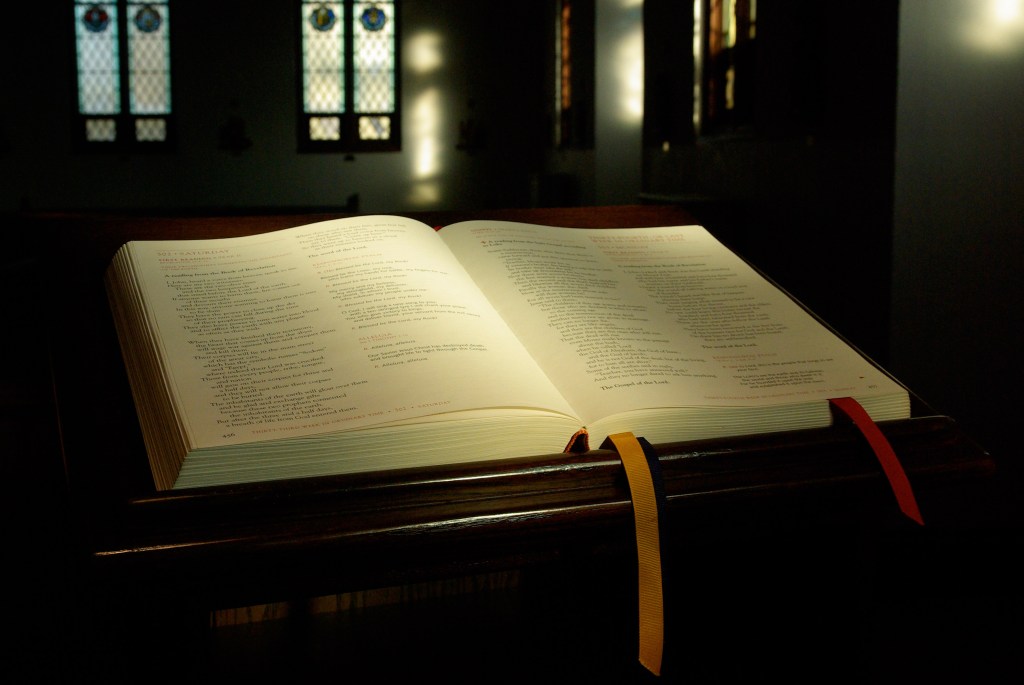
I often recommend that everyone should think about our Sunday readings in this same way. Read them a full week in advance (all are available at USCCB.org – click on Daily Readings and then scroll to the appropriate date) and consider the messages they contain. Think about what is happening in the story. What might the original audience have experienced or heard? How do you personally react to them? What questions about them do you have?
Then, choose a theme or two from the readings and simply think about them over the course of the week. Pray about them. And ask yourself these questions:
If I was going to preach about this, what would I say?
What would I want to convey about my own reaction to them?
What might God want me to tell others?
And how could I translate the great mystery of divinity to others in a way that is compelling and approachable?
The other benefit to this is that because you have been prayerfully thinking about the readings for a while, when you hear them during Mass, they will be more meaningful and impactful.
Give this a try. Consider preaching as prayer.
 Composing Catholic