
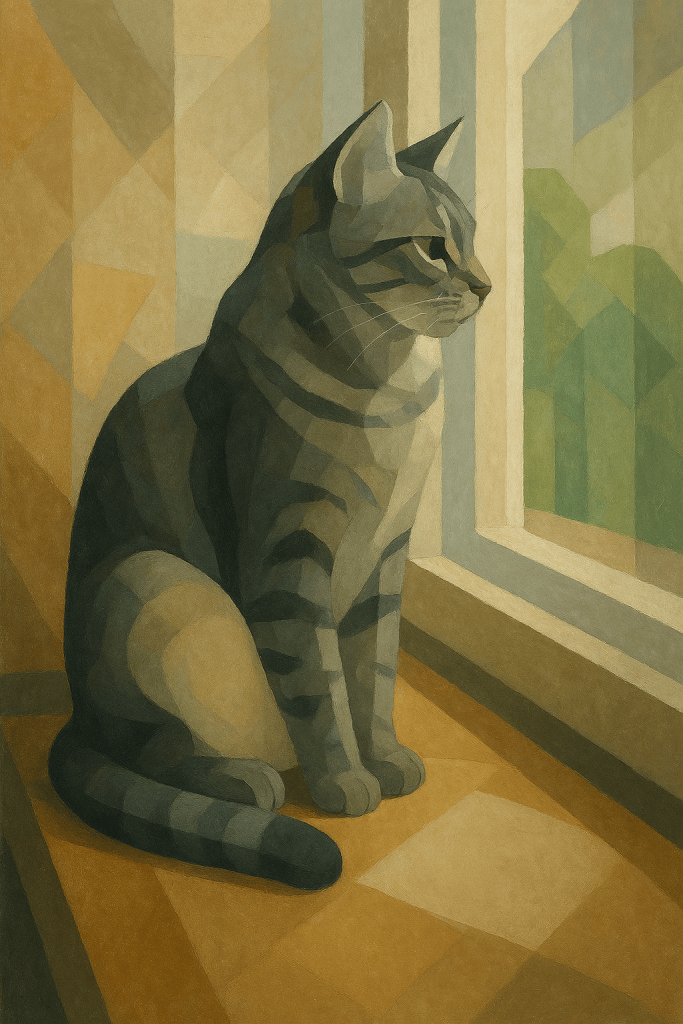
Recently, we welcomed a cat into our home—a gray tabby named Timothy.
As someone who’s always had dogs, I’ve found the adjustment… eye-opening. Dogs are eager to please; cats are not. Timothy doesn’t respond to commands, and he certainly doesn’t behave as if humans are in charge. Cats, as it turns out, are not famous for humility. Thousands of years ago they were worshipped as gods, and they still seem to remember.
Their lives revolve around their own desires: eat, play, be petted, sleep, repeat. They exalt themselves—and somehow, they get away with it. Which makes me wonder: are cats the only creatures to whom Jesus’ words in today’s Gospel don’t quite apply?
“Those who exalt themselves will be humbled, and those who humble themselves will be exalted.” — Luke 14:11
What Is Humility, Really?
Scripture emphasizes humility again and again. But why?
Humility begins with a willingness to acknowledge our own limitations. It invites us to embrace the truth that strength often emerges from weakness. When we can say:
- “I struggle to be patient with my family,”
- “I’m not as creative as others,”
- “Criticism is hard for me to hear,”
- “I carry biases I wish I didn’t,”
—we’re not tearing ourselves down. We’re stepping into a deeper truth about who we are and who God is.
Honest self-awareness leads us toward recognizing God as both our origin and our destination. This journey doesn’t require us to belittle ourselves. True humility allows us to name our flaws while still affirming our dignity as people created in God’s image.
On our own, we can do very little—but in God, we can do great things. Humility helps us claim that truth.
Humility Changes How We See Others
Humility does more than shape how we understand ourselves—it transforms how we see others.
When we embrace humility, we begin to recognize that every person carries sacred worth—not because of what they achieve or how they compare to us, but simply because they are created in the image of God.
This shift invites us to treat others not with judgment or utility, but with reverence. We stop asking, “What can this person do for me?” and begin asking, “How can I honor the dignity within them?”
Humility opens our eyes to the holiness in each life, especially in those the world often overlooks—the poor, the sick, the forgotten.
The Power of Humble Moments
Why is it that, in times of grief, the smallest acts of kindness from others move us so deeply? Because death humbles us. It strips away illusions of control and reminds us of our need. In that humility, we see more clearly the goodness of those who minister to us.
Why do people battling cancer often reach out to others facing the same struggle? Because suffering humbles us, allowing us to see the sacredness of life and the value of every person.
Jesus’ Call to Radical Connection
Pride tries to tell us we can do it all alone. It blinds us to the reverence we owe others and tempts us to measure relationships by what others can do for us.
That’s why Jesus speaks so strongly in today’s Gospel:
“When you give a banquet, invite the poor, the crippled, the blind, and the lame.” — Luke 14:13
He’s reminding us that our connection to others should not be based on usefulness, but on their inherent worth as beloved children of God.
When we move beyond pride and self-reliance, we begin to see others not as obstacles or competitors, but as fellow pilgrims—each carrying their own burdens and hopes. It’s not just about doing good; it’s about recognizing the dignity of others in a way that transforms them from strangers into companions.
The Sacredness of Connection
Every encounter with another is, in some way, an encounter with God. To look into the face of another person is to glimpse something of the divine mystery, because each of us is made in God’s image.
When we shake a hand, share a meal, or listen to a story, we are meeting more than just another human being—we are touching the presence of God who dwells within them.
Pride blinds us to this truth. It tempts us to reduce people to categories, to see them only for their usefulness or their faults. But humility restores our sight. It allows us to approach each person with reverence, to recognize that even the most ordinary exchange can become holy ground.
Timothy the Cat and the Gospel Road
Timothy the cat may seem content in his self-sufficiency. But we are called to something deeper. We are not made to walk alone. We see God most clearly when we admit our need, when we honor one another, and when we choose the road of humility.
And that road always leads to love.
Love is the highest Christian virtue because it makes God visible among us. Love is the gift we receive and the path we take. If love is the only road to God, then the message of today’s Gospel is clear: it is not the proud who walk that road, but the humble.
Pride may chase shortcuts, but humility embraces the journey—with grace, vulnerability, and trust in God.
“Humble yourself the more, the greater you are, and you will find favor with God.” — Sirach 3:18
 Composing Catholic