
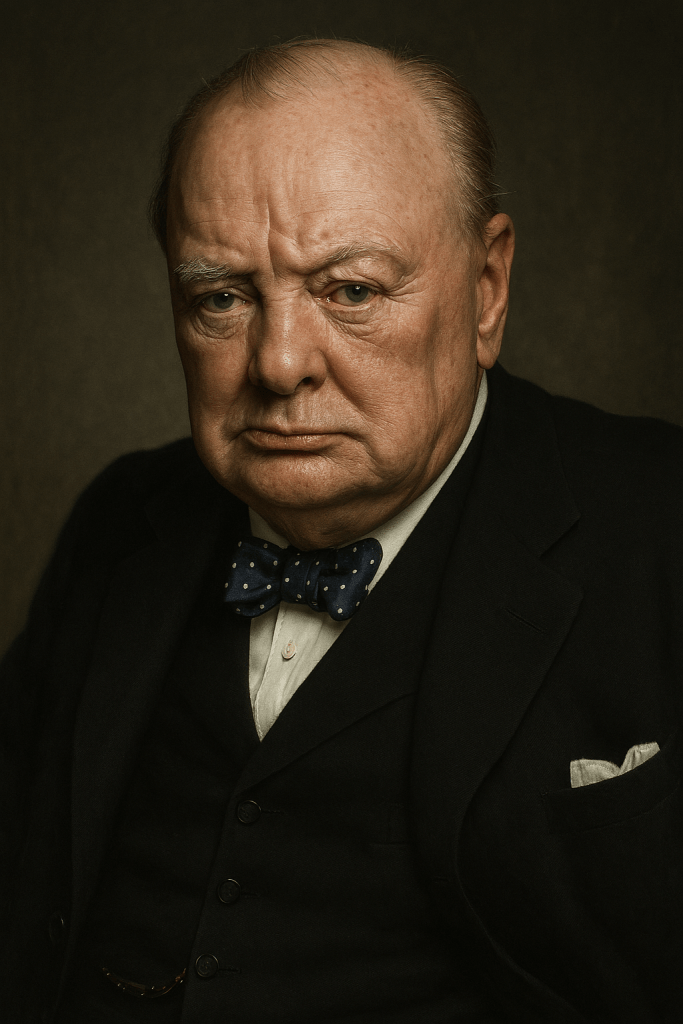
Winston Churchill once stated: “If you have enemies, good. It means you stood for something at least once in your life.” At first hearing, this sounds brash, even combative, yet beneath its grit lies a truth we may forget: a life of conviction will not always be met with applause. To stand for something, especially something true, good, and holy is to risk misunderstanding, resistance, and even hostility. But Scripture reminds us that such courage is not only necessary; it is the very soil in which God’s light breaks forth.
Isaiah speaks to a people who know darkness intimately. The prophet describes a land “in gloom,” a people who have walked in deep shadow. Yet into that very darkness, Isaiah proclaims a promise: “The people who walked in darkness have seen a great light.” God does not wait for perfect conditions to reveal His glory. He shines precisely where fear, confusion, and division seem strongest. The light does not appear because the people have triumphed; it appears because God is faithful.
This is the same dynamic at work in the Gospel of Matthew. Jesus begins His public ministry not in the centers of power but in “Galilee of the Gentiles” – a region considered spiritually marginal, even compromised. Yet Matthew tells us that in this unlikely place, Isaiah’s prophecy is fulfilled. Christ’s light dawns not where people are already strong, but where they most need courage, healing, and hope.
And what does Jesus do as this light breaks forth? He calls disciples. Ordinary fishermen – men with no credentials, no influence, no strategic advantage. He calls them not to comfort but to mission: “Come after me, and I will make you fishers of men.” To follow Him is to step into the light – and to stand for that light in a world that often prefers the shadows.
This is where Churchill’s insight becomes especially relevant for the Christian life. If we follow Christ with sincerity, we will inevitably stand for something. And if we stand for something, we will eventually face resistance. Not because we seek conflict, but because truth has a way of unsettling what is false. Love has a way of exposing what is selfish. Mercy has a way of challenging what is cruel. Unity has a way of confronting what is divisive.
St. Paul understood this well. Writing to the Corinthians, he pleads for unity: “that there be no divisions among you.” Yet he also names the reality that factions have already formed. Some claim allegiance to Paul, others to Apollos, others to Cephas. Paul refuses to play that game. His mission is not to build a fan base but to preach Christ: Christ crucified, Christ risen, Christ who alone is the source of unity. To stand for Christ, Paul knows, is to risk disappointing those who want him to take sides, to flatter their preferences, or to soften the demands of the Gospel.
But Paul stands firm. Not harshly, not arrogantly, but with clarity and love. He stands for the One who called him. And in doing so, he teaches us that Christian conviction is not stubbornness; it is fidelity. It is the courage to remain rooted in Christ even when others misunderstand, criticize, or oppose us.
For Catholics today, this message is both challenging and liberating. We live in a world that often rewards compromise and punishes conviction. To speak of truth, to defend the dignity of every human person, to uphold the teachings of Christ and His Church can certainly invite criticism. But if we never face resistance, it may be worth asking whether we are standing for anything at all.
The good news is that we do not stand alone. The same Christ who called fishermen on the shores of Galilee calls us now. The same light that broke into the darkness of Isaiah’s world shines into ours. The same Spirit who united the early Church strengthens us today.
To stand for Christ is not to seek enemies. It is to seek fidelity. And if resistance comes, we need not fear. For every moment of courage becomes a place where God’s light can shine more brightly – through us, in us, and sometimes even in spite of us.
May we be a people who stand for something. May we stand for Christ. And may His light, shining through our imperfect but willing hearts, bring hope to a world still longing for the dawn.
 Composing Catholic