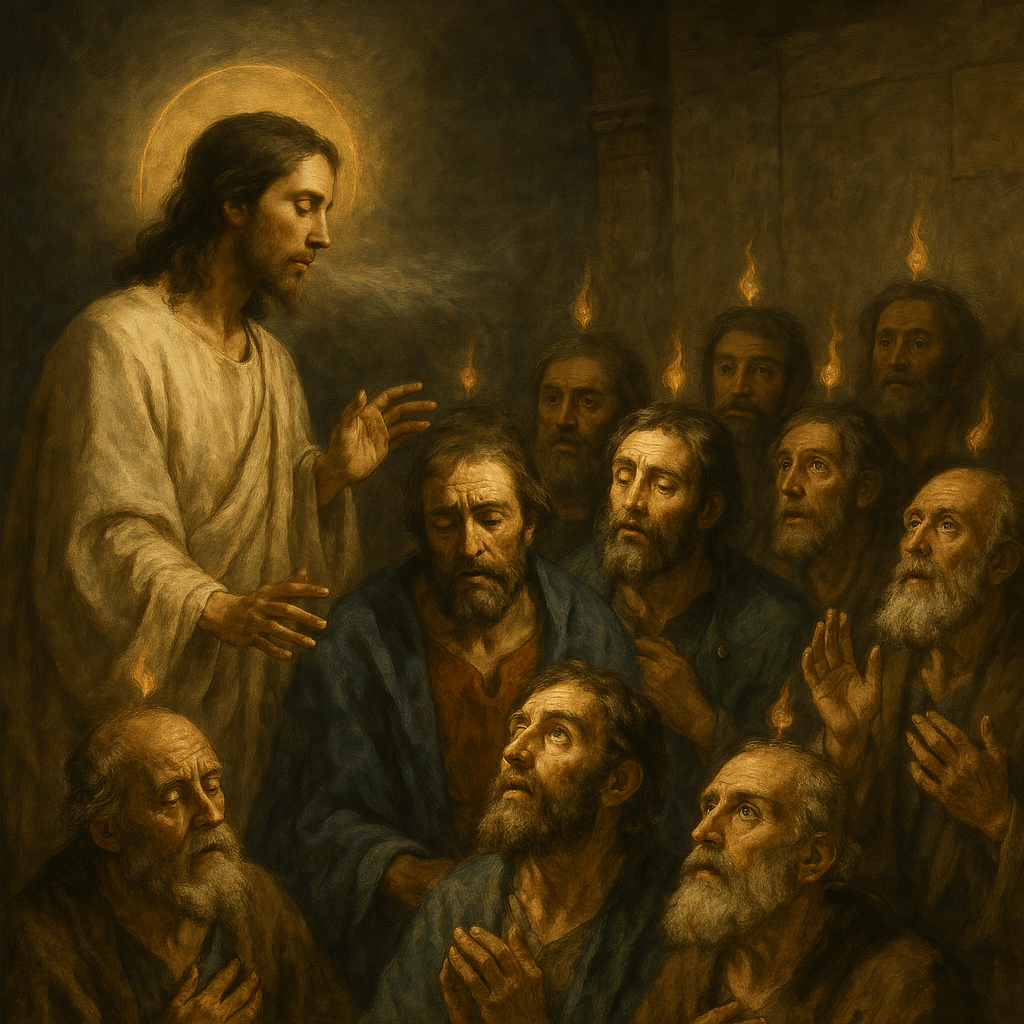
In the Gospel passage preceding the moment widely recognized as the birth of our Church, when Jesus offered to his disciples a profound gift – the eternal breath of God, the Holy Spirit of eternal accompaniment – Mary of Magdala announced that she had just encountered the Risen Lord outside of an empty tomb. Still though, they remained fearful and in hiding having been deeply fractured by the events of the past few days.
They were wounded.
I have always been struck by the fact that Jesus greeted them with an invitation to be at peace and then immediately showed to them his hands and side, the places where he had been deeply fractured himself. It’s the linking together of the notion of peace along with a vivid reminder of his wounds that causes me to pause. It was as though they recognized him by the very signs of his own suffering, leading to their great relief and peace.
He was recognized.
And I wonder if it was an awkward moment for most of them having abandoned Jesus in his hour of greatest need. Jesus foretold Peter’s denial and, sure enough, we all saw how that played out exactly as predicted. What must that have been like for Peter? For all of them?
Then, breathing on them, he not only offered the gift of the Holy Spirit, he also made things right, wiped away any awkwardness they may have been feeling, and through the offering of peace, forgave them. But that’s not all, he asked them to carry on this work of forgiveness, to pay it forward into the future, to themselves forgive others.
They were forgiven.
At Pentecost, we recognize the birth of our Church and it’s worth reflecting on the three distinct phases of woundedness, recognition, and forgiveness that lie at the very heart of this story. In effect, it is the story of our own faith.
First, we acknowledge our own brokenness, understanding that through our choices we sin, and that sin is what ultimately causes our deepest wounds. Second, we surrender to Christ, knowing that without his help and presence in our lives, we are destined to remain fallen, desperate, and hopeless. And third, through our Lord’s forgiveness, we can rise, continue forward, and hope again.
There is a commissioning element to Pentecost as well. Those followers were called to participate in their leader’s mission of salvation, to pass on all that they had learned, to bring Christ’s presence through the words and gestures of their Last Supper together out to a hungry and desperate world… and to love. Loving requires forgiveness. We are called to forgive.
The Pentecost story is the story of our faith, it is the invitation to rise up from our wounds, and to continue this story into the future by forgiving. Those early followers were called as such and so too are you and me.
But this was no fool’s errand, no pointless task, no futile pursuit. Jesus knew what he was doing as he set about continuing the very mission he was appointed to undertake, not for the rest of those followers’ lives, nor for some predefined period of time, but rather until the very end of all time. This was Christ’s eternal quest, to save those he had encountered during his lifetime and all who would follow after.
Come Holy Spirit. Help us to carry this forward.
 Composing Catholic